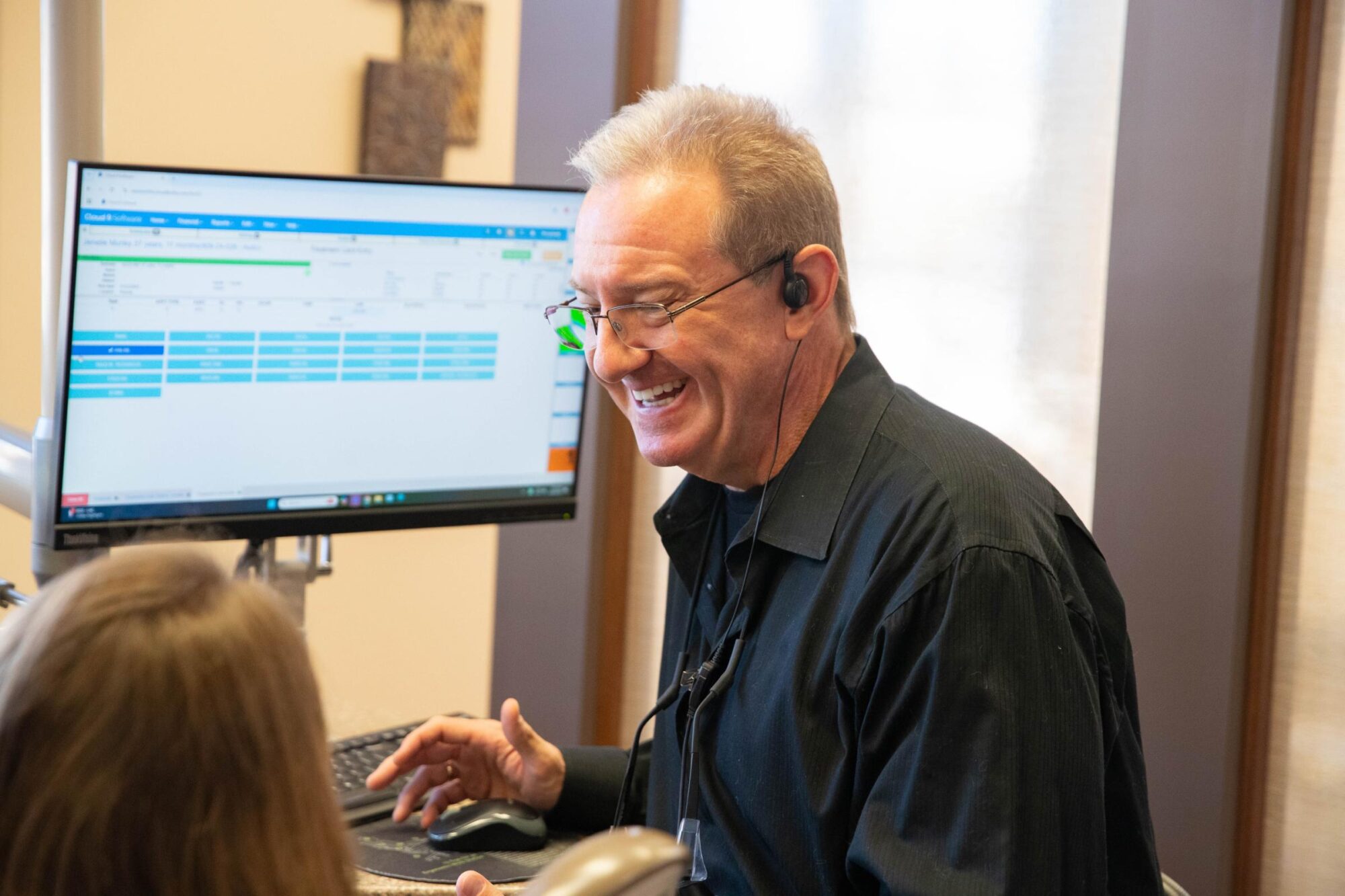
Wondering when to book your child’s first orthodontist visit? The short answer: by age 7. That’s the age the American Association of Orthodontists (AAO) recommends for every child’s first check-up, and it’s one of the smartest preventive steps you can take for your child’s smile.
Below, you’ll find a complete guide to the age 7 orthodontist visit, what happens during the exam, and how early evaluation can save your family time and stress later on.
What Is the Age 7 Orthodontic Check-Up?
The age 7 check-up is a preventive orthodontic evaluation that looks at how your child’s jaw is growing and how their adult teeth are coming in. It’s a quick, friendly visit, not a commitment to braces. The goal is simple: spot small issues early so they don’t turn into bigger ones later.
Why age 7? By this age, most kids have a mix of baby teeth and permanent teeth. That blend gives Dr. Gary Sexson II a clear window into how the bite is developing, how much space is available for incoming adult teeth, and whether the upper and lower jaws are growing in harmony. The AAO recommends that every child see an orthodontist no later than age 7 for this very reason.
Keep in mind that an early orthodontic evaluation is diagnostic. In many cases, Dr. Sexson will simply recommend monitoring your child’s growth over time. Treatment is only suggested when there’s a clear benefit to acting early.
At Sexson Orthodontics, first visits are free. You and your child can meet our team, tour the office, and get expert answers without any pressure.
How the First Orthodontic Visit Works
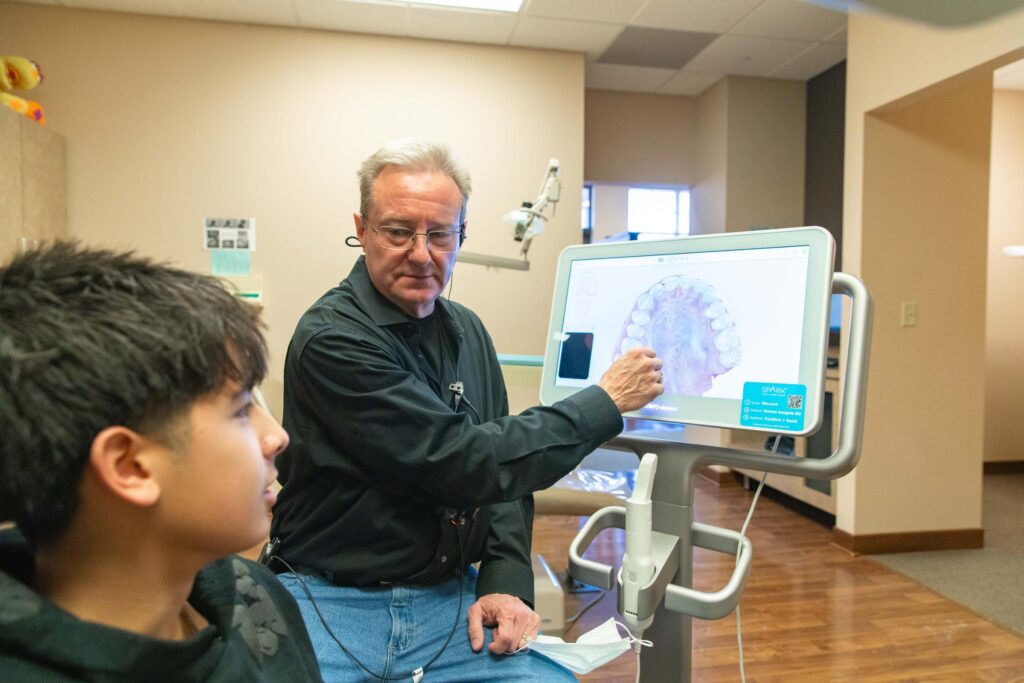
Your child’s first orthodontist visit at Sexson Orthodontics is designed to feel easy and welcoming. Most appointments last about 30 to 45 minutes, and we keep things kid-friendly from start to finish. Here’s what to expect:
- Review of dental and medical history. Our team will chat with you about your child’s overall health, dental habits, any thumb sucking or mouth breathing, and family history of orthodontic issues.
- Visual exam. Dr. Sexson will look at your child’s teeth, bite, jaw alignment, and how the permanent teeth are erupting. This is the heart of the age 7 orthodontist visit and takes just a few minutes.
- Digital X-rays or scans if needed. If Dr. Sexson wants a closer look at what’s happening beneath the gums, we may take low-radiation digital images. These help us see unerupted teeth, jaw bone growth, and spacing.
- Findings discussion. Dr. Sexson will walk you and your child through what he sees in plain, friendly language. You’ll have time to ask questions.
- Personalized recommendation. Based on the exam, Dr. Sexson will suggest one of three paths: monitor growth with periodic check-ups, start early treatment (Phase 1), or no action needed at this time.
Because the free consultation at Sexson Orthodontics comes with no obligation, families often leave the first visit feeling informed and relieved, no matter the recommendation.
Benefits of Early Orthodontic Evaluation
An early orthodontic evaluation gives Dr. Sexson the chance to work with your child’s natural growth rather than against it. According to the AAO, interceptive orthodontics can address issues that are much harder (and sometimes impossible) to correct once the jaw has finished developing.
Here are the key benefits of catching issues early:
- Guide jaw growth while bones are still developing. The upper and lower jaws are still shaping themselves in grade school. Gentle guidance now can prevent major bite issues later.
- Create space for permanent teeth. If the arch is too narrow or crowded, Dr. Sexson can expand it gradually to make room, reducing the chance of impacted or crooked adult teeth.
- Lower the risk of trauma. Front teeth that stick out are much more likely to chip or break during sports and play. Pulling them back early protects your child’s smile.
- Correct harmful oral habits. Thumb sucking, tongue thrust, and mouth breathing can reshape the jaw and teeth over time. Early treatment helps break these patterns before they cause lasting changes.
- Reduce the need for extractions or jaw procedures later. When there’s enough room for every tooth and the jaws are aligned, teens often avoid the more involved treatments that can come with waiting too long.
- Shorter, simpler Phase 2 treatment in the teen years. Many kids who complete Phase 1 go on to need only a short second phase with braces or clear aligners to finish their smile.
In short, an age 7 orthodontist visit with Dr. Sexson sets the foundation for a healthier smile that’s easier to maintain through the teen years and beyond.
Phase 1 vs. Phase 2 Treatment: What’s the Difference?
Phase 1 treatment (also called interceptive orthodontics) happens between ages 7 and 10, while bones are still growing. Phase 2 treatment starts around age 11 or older and focuses on aligning all the permanent teeth. Not every child needs Phase 1, and many go straight to Phase 2 as tweens or teens.
Here’s a quick comparison:
| Feature | Phase 1 (Interceptive) | Phase 2 (Comprehensive) |
|---|---|---|
| Typical age | 7–10 years | 11+ years |
| Main goal | Guide jaw growth, correct bite issues, make space | Align all permanent teeth into final position |
| Common appliances | Palatal expanders, partial braces, habit appliances, space maintainers | Full metal braces, clear braces, or Spark clear aligners |
| Duration | Typically 6–18 months | Typically 12–24 months |
| Who needs it | Kids with specific growth or bite issues | Most teens who need full alignment |
| What follows | Resting period while adult teeth erupt | Retainers to maintain the final result |
Between the two phases, there’s usually a resting period. During this time, Dr. Sexson monitors your child’s growth every 6 to 12 months while the remaining baby teeth fall out and adult teeth come in. Once all permanent teeth are in place, Phase 2 begins (if needed) and is often much shorter and simpler because Phase 1 did the heavy lifting.
Insurance and Payment Options for Early Treatment
The age 7 orthodontist visit at Sexson Orthodontics is completely free. There’s no obligation to start treatment and no pressure. If Phase 1 treatment is recommended, our team will walk you through everything so you know what to expect before moving forward.
Here’s what families should know about paying for early treatment:
- Many dental insurance plans include orthodontic benefits for children, often covering a portion of Phase 1 treatment.
- HSA and FSA funds are eligible for orthodontic care, letting you use pre-tax dollars.
- Sexson Orthodontics offers flexible monthly plans so you can spread payments over time.
- Online payment is available for busy families who prefer to manage things digitally.
Getting a clear picture of your options starts with a free consultation. Our team is happy to review your insurance and walk through payment options that fit your family.
Signs Your Child May Need Early Treatment
Even if your child’s teeth look straight, hidden bite issues can still be developing. Keep an eye out for these common signs that an early orthodontic evaluation may be especially helpful:
- Early or late loss of baby teeth (before age 5 or after age 7)
- Difficulty chewing or biting food
- Mouth breathing or snoring during sleep
- Thumb sucking past age 5 or a persistent tongue thrust
- Crowded, blocked-out, or clearly crooked teeth
- Jaws that shift, click, or pop when opening and closing
- Facial asymmetry or a jaw that appears off-center
- Front teeth that protrude noticeably over the lower teeth
- A crossbite (upper teeth sitting inside lower teeth when biting down)
- An underbite where the lower teeth jut out past the upper teeth
Noticing one or more of these? That’s a good reason to book a free consultation. Dr. Sexson can tell you whether it’s something to watch, address now, or set aside until your child is older.
Frequently Asked Questions
When should my child first see an orthodontist?
The American Association of Orthodontists recommends that every child have their first orthodontic evaluation no later than age 7. By this age, your child has enough permanent teeth for Dr. Sexson to spot developing issues while there’s still time to guide growth gently. At Sexson Orthodontics, this first visit is always free.
Is age 7 too young for braces?
Not at all, but keep in mind that an evaluation is different from starting treatment. Most 7-year-olds who come in for a check-up don’t need braces right away. Dr. Sexson may simply recommend monitoring your child’s growth. If early treatment is suggested, it’s usually to correct a specific issue that benefits from acting now rather than waiting.
What if my child’s teeth look straight?
Straight-looking teeth don’t always mean a healthy bite. Issues like crossbite, underbite, crowding of unerupted adult teeth, or jaw misalignment can hide beneath the surface. An age 7 orthodontist visit uses a trained eye (and sometimes digital imaging) to catch things you can’t see at home.
Does insurance cover early orthodontic evaluations?
Many dental insurance plans include orthodontic benefits for children, and initial consultations are often covered or free. At Sexson Orthodontics, we offer free first visits regardless of your insurance situation. Our team will also help you understand your plan’s coverage for Phase 1 treatment if it’s recommended.
What could disqualify my child from braces?
Very few things rule out orthodontic care entirely. However, severe untreated tooth decay, active gum disease, or very poor oral hygiene habits may need to be addressed before treatment begins. Dr. Sexson will walk you through any steps needed to prepare your child for a successful orthodontic experience.
How long does early treatment last?
Phase 1 treatment typically lasts 6 to 18 months, depending on what’s being corrected. After that, there’s usually a resting period while your child’s remaining adult teeth erupt. If a second phase is needed in the teen years, it’s often shorter and simpler thanks to the groundwork laid during Phase 1.
Ready to find out where your child stands? Book a free consultation at Sexson Orthodontics in Rockford and let Dr. Sexson and our team give you clear answers about your child’s smile. Call 815-398-7777 or schedule your free consult online today.