
What Are Clear Aligners?
Clear aligners are a series of custom-made, removable plastic trays that gradually shift your teeth into straighter positions. You wear each set 20 to 22 hours a day for about one to two weeks, then move to the next tray. Dr. Gary Sexson II prescribes and monitors every step, so it’s never a mail-order service.
The trays are made from a flexible, thin thermoplastic that hugs each tooth and applies steady, gentle pressure across the whole arch. Because the material is thin and clear, most people won’t notice you’re wearing them.
Clear aligners handle a lot more than minor touch-ups. They’re used for crowding, spacing, gaps, mild-to-moderate bite concerns, and relapse in adults whose teeth drifted after braces years ago.
At Sexson Orthodontics, LTD., we use Spark clear aligners, which work the same way with a tray material designed to stay clearer and resist staining. Same idea, same removable convenience, planned and adjusted by Dr. Sexson rather than a website questionnaire.
What to Expect With Clear Aligners: The Process Step by Step
Clear aligner care follows five steps: a free consult with a digital scan, a custom plan and aligner fabrication, a fitting visit with attachments, tray changes every one to two weeks with periodic check-ins, and retainers at the end. Most cases run 6 to 18 months from scan to finish.
What Are the Steps From Scan to Retainer?
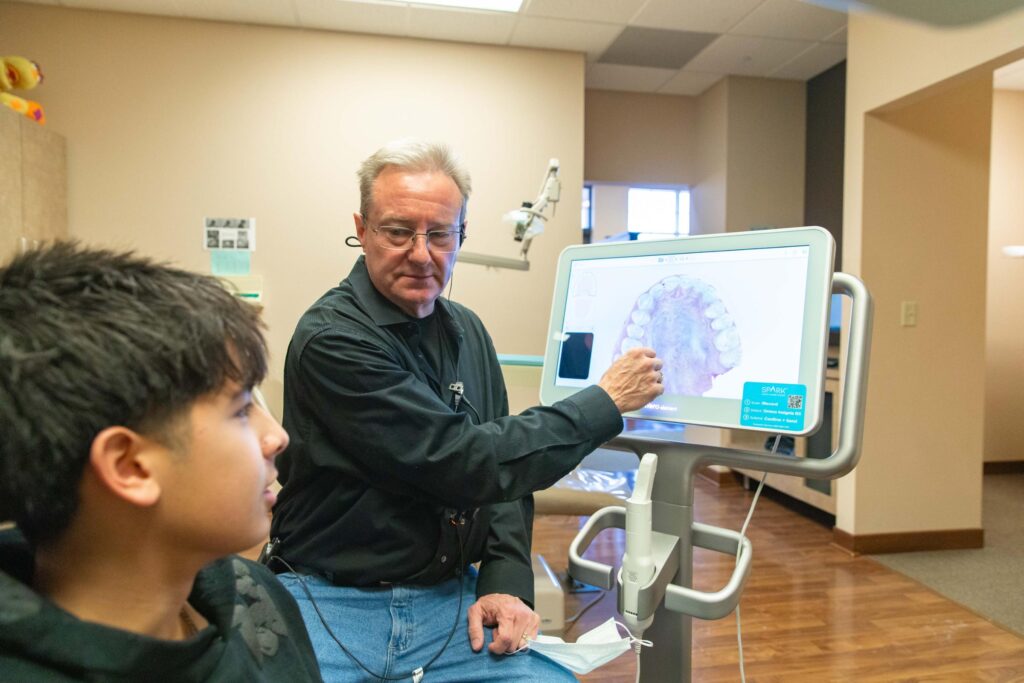
Free consult and digital scan. No trays of goop. A handheld scanner builds a 3D model of your teeth in minutes, and Dr. Sexson uses it to show you a preview of where your teeth are headed.
Custom plan and fabrication. Dr. Sexson maps out the exact tooth movements, then your aligners are manufactured to that prescription. Expect roughly three to four weeks for your first set to arrive.
Fitting visit. We check the fit, place small tooth-colored attachments (they give the trays something to grip), and walk you through wear time, cleaning, and storage. You’ll leave with several sets and a schedule.
Tray changes and check-ins. Swap trays every one to two weeks at home. Visits usually land every 6 to 10 weeks, and some cases qualify for virtual check-ins between visits.
Retainers. Once your teeth land exactly where they should, retainers are what keep them there, and honestly, this is the rewarding part. You put in the work, so let’s protect it. Wearing your retainer the way Dr. Sexson recommends is how your new smile stays your smile for years to come.
What Does the First Week Feel Like?
The first two or three days with a new tray bring mild pressure and a tight feeling, which is your teeth moving. That sensation fades quickly, and each new tray gets easier as you settle into the routine.
A slight lisp is common for a day or two while your tongue adjusts. Removing and reseating the trays feels clumsy at first, then becomes second nature. Families often tell us the hardest habit is remembering to put the trays back in after snacking.
Benefits of Clear Aligners
Clear aligners appeal to adults and teens who want a straighter smile without announcing it to every coworker and classmate. Here’s what draws most families to the option:
Nearly invisible. Thin, clear trays sit close to the teeth, so photos, presentations, and first dates stay about you, not your orthodontics.
Removable. Take them out to eat, brush, floss, play sports, or perform in the school band. No food is off-limits.
Nothing to poke or break. Without brackets and wires, emergency visits for loose parts drop way down.
You see the plan first. Digital planning maps every movement before your first tray goes in.
Fewer chair visits. Many aligner cases need less frequent in-office time than braces, with virtual monitoring filling the gaps.
Easier hygiene. You brush and floss your actual teeth, not around hardware.
You’ve got options, and clear aligners are one of the most flexible ones we offer.
Clear Aligners vs. Metal Braces: What’s Different
Both straighten teeth. They just go about it differently, and one may suit your case better than the other.
| Feature | Clear Aligners | Metal Braces | Clear Braces |
|---|---|---|---|
| Appearance | Nearly invisible trays | Visible brackets, colorful bands | Tooth-colored brackets, low profile |
| Removable | Yes, for eating and cleaning | No, fixed until you finish | No, fixed until you finish |
| Comfort | Smooth trays, mild pressure with each set | Occasional irritation from wires | Similar to metal, smoother brackets |
| Hygiene | Brush and floss normally | Requires threaders and extra care | Requires threaders and extra care |
| Visit frequency | Every 6 to 10 weeks, virtual options | Every 4 to 8 weeks | Every 4 to 8 weeks |
| Best for | Mild-to-moderate crowding, spacing, gaps | Complex rotations, significant bite correction | Detailed cases with a discreet look |
| Diet | No restrictions (trays come out) | Skip hard, sticky, chewy foods | Skip hard, sticky, chewy foods |
Braces still win for certain cases. Severely rotated teeth, big bite corrections, and cases needing precise control over many teeth at once tend to move more predictably with fixed brackets.
There’s also the discipline factor. Braces work around the clock whether you think about them or not, while aligners only work when they’re in your mouth. If a teen forgets trays at a friend’s house every weekend, braces may simply be the better fit.
Want discretion without the responsibility of removable trays? Clear braces sit right in the middle, blending with your natural teeth while staying put.
What Affects the Cost of Clear Aligners
The cost of clear aligners depends on three things: how complex your case is, how long your care lasts, and how many trays you need. Simple spacing fixes cost less. Full bite correction costs more. At Sexson Orthodontics, we offer flexible monthly plans with no down payment. A free consult gives you an exact figure for your case, with no guessing involved.
Several things move the number up or down:
Crowding severity and how far teeth need to travel
Bite correction needs, including crossbite or overbite work
Refinement trays, which fine-tune results near the end
Records and retainers, which are part of a complete plan
Total length of care, since longer cases require more trays
Most dental plans with orthodontic benefits treat clear aligners the same as braces, and FSA or HSA dollars typically apply. Our team will help you sort out what your plan covers before you commit to anything.
Full aligner care usually lands in the same neighborhood as comparable braces, so the decision often comes down to lifestyle rather than price. The only way to get an accurate quote is an exam. No two sets of teeth need the same number of trays, and no two schedules look alike either.
Who Is a Good Candidate for Clear Aligners?
Good candidates for clear aligners have mild-to-moderate crowding, spacing, gaps, crossbite, or teeth that shifted after previous braces. Beyond the teeth themselves, the biggest factor is habit. Wearing trays 20 to 22 hours daily and keeping them in a case (not a napkin) is what makes aligners work.
You’re likely a strong candidate if:
Your alignment concerns fall in the mild-to-moderate range
You’ll commit to full daily wear and consistent tray changes
Your gums are healthy and any decay has been treated first
You want a discreet option that fits work, school, or sports
Teens qualify too. Teen aligners include compliance indicators, small blue dots that fade with wear, so parents and Dr. Sexson can see whether the trays are actually going in.
Some cases need more than trays can deliver. Significant skeletal differences or severe bite concerns may call for braces, or braces combined with aligners later. Honest guidance beats a forced fit every time.
An exam with X-rays and a digital scan confirms which route suits you. Dr. Gary Sexson II, our orthodontic specialist and the only doctor who plans and monitors care at our practice, will walk you through what he sees and why he’s recommending it. For over 28 years, Sexson Orthodontics has delivered affordable, timely care to families, and that experience shows up in how clearly he explains your choices.
Curious whether clear aligners fit your smile? A free consult includes a digital scan, a straight assessment of your options, and a clear look at flexible monthly plans with no down payment required.
Our smile shop welcomes families of every age, and you’ll find the same laid-back atmosphere whether you’re 12 or 52. Bring your questions, including the ones you think are too small to ask. We’ve got answers.
Start your free consultation with Dr. Sexson, or follow along on Instagram to see real stories, real smiles from Sexson Orthodontics families.

Frequently Asked Questions About Clear Aligners
How long do clear aligners take?
Most clear aligner cases run 6 to 18 months, depending on complexity. Minor spacing or relapse cases often finish on the shorter end, while cases involving bite correction take longer. Dr. Gary Sexson II will give you an estimated timeline at your free consult, based on your scan.
Do clear aligners hurt?
You’ll feel mild pressure and tightness for about one to three days after switching to a new tray. That’s the aligner doing its job. Most families describe it as an awareness rather than discomfort, and it settles as your teeth adjust. Switching trays at bedtime helps you sleep through the tightest stretch.
Can I drink coffee with my aligners in?
Take your trays out for everything except water. Hot drinks can warp the plastic, and coffee, tea, and soda can stain trays or trap sugar against your enamel. Rinse your mouth and trays before putting them back in, and you’ll keep both looking clear.
Will people notice my aligners?
Rarely. The trays are thin and clear, and the attachments bonded to your teeth are tooth-colored. Most people don’t realize you’re in care unless you tell them, which is exactly why so many adults choose this route.
What happens if I lose an aligner?
Call our office right away. Depending on where you are in the sequence, we’ll have you wear your previous tray or move ahead to the next one while a replacement is ordered. Keeping your last tray until the current one is finished saves a lot of headaches.
Do I need a retainer afterward?
Yes. Teeth naturally want to drift back, and the American Association of Orthodontists notes that retainers are what keep your finished result in place. Dr. Gary Sexson II will recommend a retainer plan, and wearing it as directed protects everything you invested in.